
Local AI for Mid-Sized Companies: Building and Running Your Own Models
Your sales team types customer data into ChatGPT to draft emails. Your HR department uploads resumes to an AI tool for summaries. A project manager sends contract drafts to Claude for clause review. Do you know where this data ends up?
In most mid-sized companies, the honest answer is: no. AI has arrived in everyday work, but almost always through cloud services from American providers. Every request sends company data across the Atlantic. Whether this is compatible with GDPR is often unclear. Whether it complies with industry-specific regulations, even less so.
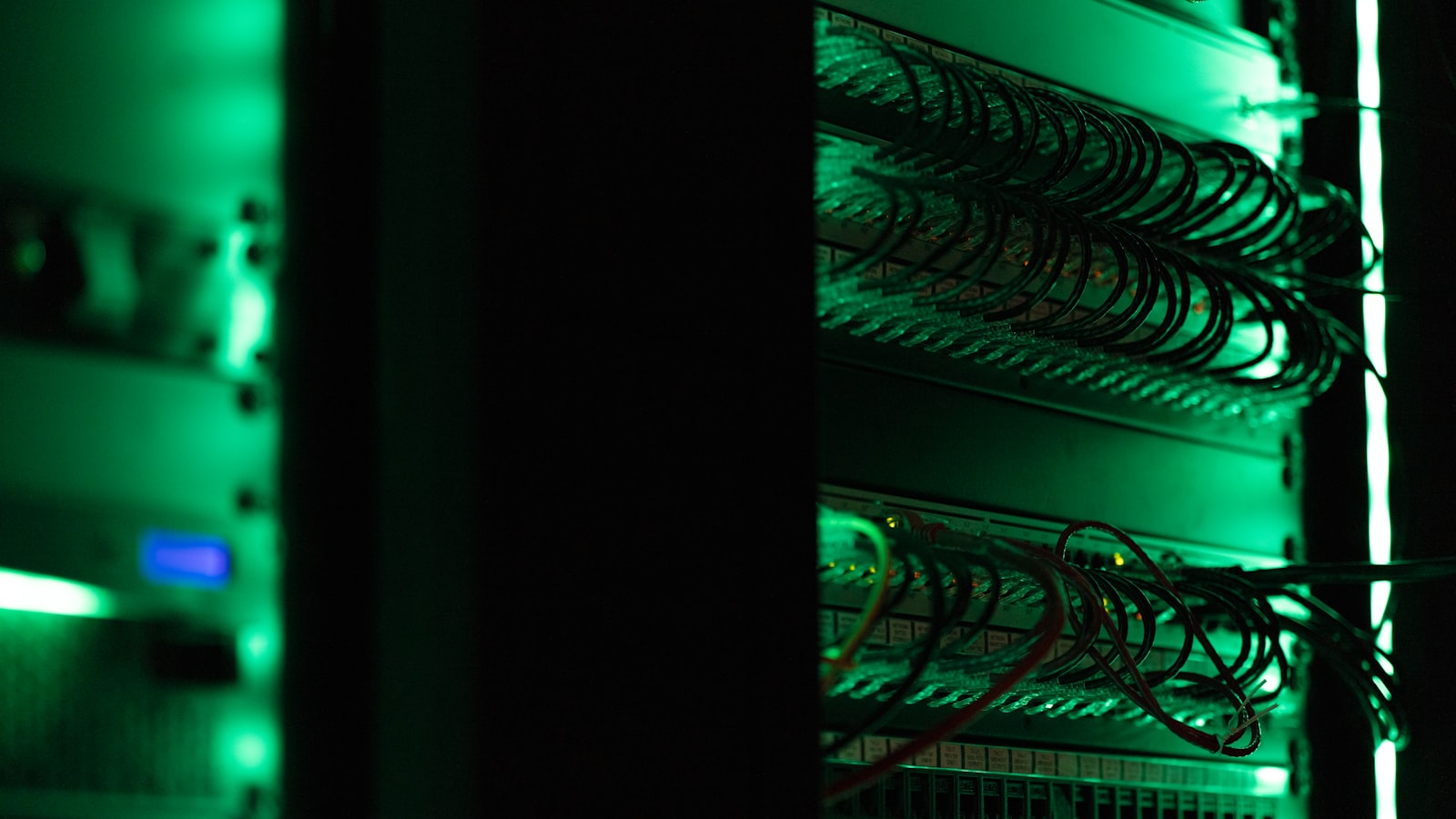
The alternative exists: powerful AI models that run on your own or controlled infrastructure. No data leaving the building. No dependency on price changes from external providers. Full control.
This article shows why local AI is becoming relevant for mid-sized companies right now, what it can and cannot do, what it costs, and how to get started. It is based on my experience with AI projects in mid-sized companies and the current market situation in spring 2026.
Why Local AI Is Becoming Relevant Now
Just 18 months ago, local AI was a matter for corporations with their own data centers and machine learning teams. Three developments have fundamentally changed that.
The Open-Source Revolution
The capability of freely available AI models has improved dramatically over the past twelve months. Models like DeepSeek-V3.2, Qwen 3 from Alibaba, and Mistral Large 3 achieve results on standard benchmarks comparable to GPT-4 and Claude. DeepSeek-V3.2 scores 94.2 percent on the MMLU benchmark, Qwen 3 reaches 97.8 percent on MATH-500 in reasoning mode. The gap between open-source and proprietary models has practically closed for most business use cases.
Particularly relevant for mid-sized companies: there are now specialized smaller models that outperform larger models on specific tasks. Microsoft's Phi-4 with just 14 billion parameters beats the 671-billion-parameter model DeepSeek-R1 on mathematical benchmarks. Qwen3-4B, a model that runs on a laptop, rivals the 72-billion-parameter Qwen2.5-72B. Bigger is not automatically better.
Important for licensing: models like DeepSeek (MIT license), Qwen 3 (Apache 2.0), and Mistral Large 3 (Apache 2.0) are unrestricted for commercial use. Meta's Llama models are freely available but not open source in the strict sense: the Llama Community License permits use up to 700 million monthly users, which is not a problem for mid-sized companies but relevant for legal classification.
Hardware Is Becoming Affordable
A powerful AI server is no longer a million-euro project. There are several realistic options for getting started today:
An Apple Mac Studio with M4 Max chip and 128 GB memory costs around 4,500 EUR and runs models with up to 30 billion parameters quietly enough for office operation. For more powerful models, used NVIDIA A100 GPUs with 80 GB memory at 7,000 to 10,000 EUR enable running 70-billion-parameter models. A complete entry-level server with an A10 GPU starts at 8,000 to 12,000 EUR.
As a middle ground between own hardware and cloud APIs, providers like Hetzner offer dedicated GPU servers from 500 to 700 EUR per month. Data stays in Europe, you run your own model, but without hardware in your server room.
Regulatory Pressure
62 percent of German companies cite data protection concerns as the main obstacle to AI adoption (Bitkom 2024). 78 percent consider data protection the most important factor when choosing AI solutions (TUV 2024). These numbers reflect a real problem.
When a German company sends employee or customer data to OpenAI, Anthropic, or Google, it constitutes processing of personal data under GDPR. This requires a data processing agreement, a documented legal basis, and for sensitive data, a data protection impact assessment. The third-country transfer to the US relies on the EU-US Data Privacy Framework, whose long-term stability remains uncertain given previous Schrems rulings.
For certain industries, the situation is significantly more acute. Cloud-based AI platforms differ considerably in their data protection guarantees, but for some use cases, even the best cloud solution is not sufficient:
| Industry | Regulation | Local AI |
|---|---|---|
| Healthcare | Professional secrecy laws, GDPR Art. 9 | Strongly recommended |
| Finance | BaFin requirements, DORA | Recommended |
| Legal | Attorney confidentiality, professional secrecy | Strongly recommended |
| Public sector | BSI IT security standards | Often mandatory |
Additionally, the EU AI Act, whose main provisions take effect from August 2026, classifies AI systems by risk level and introduces documentation and transparency obligations for operators. Local deployment does not solve all compliance questions, as AI Act obligations apply regardless of the operating model. But it eliminates the complexity of third-country data transfers and significantly simplifies compliance documentation.
What Local AI Can and Cannot Do
Local AI is not a replacement for GPT-4o or Claude. But for the majority of AI use cases in mid-sized companies, it is sufficient. The decisive question is not "Is the model as good as GPT-4?" but "Is it good enough for this specific task?"
Strengths of Local Models
Text generation and communication. Drafting emails, summarizing reports, formulating standard responses: these are the most common AI applications in daily office work, and local models from 8 billion parameters handle them reliably. Qwen3-8B or Mistral 7B deliver results for these tasks that are barely distinguishable from cloud models.
Document analysis. Searching contracts, evaluating invoices, summarizing technical documentation: combined with a RAG system (Retrieval-Augmented Generation), local models can access your own document inventory and answer questions about it without the documents leaving the company. Quality assurance for such systems is a topic in its own right, but the technology is production-ready.
Classification and sorting. Categorizing customer inquiries, prioritizing support tickets, performing sentiment analysis: for these structured tasks, models with 3 to 14 billion parameters often suffice, running on a single GPU.
Code assistance. Developers on the team can use local models as code assistants that have access to proprietary code without it being sent to external services.
Limitations of Local Models
Complex reasoning. For multi-step logic tasks, complex analyses, and creative problem-solving, the large cloud models still have an edge. For tasks that truly require the full power of GPT-4o or Claude Opus, there is no equivalent local alternative unless you run a 70-billion-parameter model on corresponding hardware.
Conversation quality. For long, complex dialogues with many context switches, cloud models are better. For most business use cases, single queries, short dialogues, structured tasks, this difference is negligible.
Currency. Local models have a fixed knowledge state from the time of their training. They cannot research on the internet. For tasks requiring current knowledge, you need either a RAG system with up-to-date documents or a targeted cloud API connection.
The 80/20 Rule
80 percent of AI use cases in mid-sized companies are standard tasks: drafting emails, summarizing documents, sorting inquiries, translating texts. Local models handle these reliably. For the remaining 20 percent where maximum quality or special capabilities are needed, you can selectively use cloud APIs. This hybrid model combines data protection with full capability.
Three Architecture Models for Mid-Sized Companies
The decision "local vs. cloud" is not an either-or question. There are three proven architecture models that have established themselves in mid-sized companies.
Model 1: Fully Local
Own server in the data center or server room. All data stays within the company. No external data processing.
Suitable for: highly sensitive data (patient records, client files, financial data), regulated industries, companies with their own IT operations and high usage volume.
Cost: 8,000 to 25,000 EUR for hardware, plus 500 to 1,500 EUR monthly for electricity, maintenance, and administration.
Challenge: you need someone to operate the server, update models, and maintain the infrastructure. This does not have to be a full-time ML engineer, but an IT employee with basic AI knowledge or an external service provider.
Model 2: Own Models in the Cloud
Own GPU instances at a European provider like Hetzner, or dedicated instances at AWS or Azure. You run your own model, but on rented hardware.
Suitable for: companies without their own data center, variable workloads, teams that want to start quickly without procuring hardware.
Cost: 500 to 5,000 EUR per month, depending on model size and usage. Dedicated GPU servers at Hetzner start from 500 EUR, comparable instances at AWS are higher.
Advantage: scalable, no hardware management, quick start. Data stays on your instance and is not used for training, a key difference from using a cloud API.
Model 3: Hybrid
Local AI for sensitive data and standard tasks. Cloud APIs for complex tasks requiring maximum model quality. Routing logic decides which model is used.
Suitable for: most mid-sized companies. Pragmatic, GDPR-compliant, and capable.
Cost: combination of local infrastructure (from 12,000 EUR one-time plus 500 EUR monthly) and cloud API budget (300 to 500 EUR monthly for the complex 20 percent).
Advantage: best of both worlds. Classifying customer inquiries, drafting emails, searching documents? Runs locally, free after the initial investment, GDPR-compliant. Complex contract analysis, strategic texts, demanding reasoning? Goes selectively to the cloud API. As with the build-vs.-buy decision, the hybrid approach is often the most pragmatic solution.
What Local AI Really Costs
Numbers, not promises. A concrete scenario: mid-sized company with 200 employees, 50 active AI users.
Scenario 1: Cloud Only
| Cost Type | Amount |
|---|---|
| API costs budget models (GPT-4o-mini, 50 users) | ~150 EUR/month |
| API costs premium models (GPT-4o, complex tasks) | ~500 EUR/month |
| Development and integration (one-time) | ~30,000 EUR |
| Monitoring and maintenance | ~500 EUR/month |
| Year 1 | ~44,000 EUR |
| From year 2 | ~14,000 EUR/year |
Risks: provider price changes. Data protection concerns (62 percent of companies). Dependency on availability and API stability. OpenAI experienced several outages in 2024 and regularly retires older models.
Scenario 2: Fully Local
| Cost Type | Amount |
|---|---|
| Hardware (GPU server with A100 80GB) | ~25,000 EUR (one-time) |
| Electricity and cooling | ~200 EUR/month |
| Maintenance and updates | ~500 EUR/month |
| Development and integration (one-time) | ~35,000 EUR |
| Year 1 | ~68,400 EUR |
| From year 2 | ~8,400 EUR/year |
Break-even vs. cloud: after approximately three years, faster with increasing usage volume or rising API prices.
Scenario 3: Hybrid (Recommended)
| Cost Type | Amount |
|---|---|
| Hardware (server, entry configuration) | ~15,000 EUR (one-time) |
| Electricity and cooling | ~150 EUR/month |
| Local maintenance | ~400 EUR/month |
| Cloud API for specialized tasks | ~300 EUR/month |
| Development and integration (one-time) | ~30,000 EUR |
| Year 1 | ~55,200 EUR |
| From year 2 | ~10,200 EUR/year |
Why hybrid? Initial costs fall between cloud and local. But from year two, hybrid is the most affordable option, and you have full data control for the majority of your use cases.
An honest note: the pure API cost comparison often favors the cloud, especially at low volume. Pure token costs for 50 users with budget models are under 10 EUR per month. The strategic argument for local AI is not primarily cost savings but data sovereignty, independence, and predictable pricing. Those wanting to deploy locally mainly for cost reasons should carefully examine their usage numbers.
Getting Started: Five Steps to Local AI
1. Identify Use Cases
Before you buy hardware, clarify three questions: Where is AI already being used in your company, including unofficially? A sales representative using ChatGPT for proposals. An assistant using Claude for meeting minutes. This shadow IT exists in most companies.
Which tasks are repetitive and text-based? Email templates, document summaries, ticket categorization: these are the low-hanging fruit.
Where does sensitive data flow into external tools? Customer data, personnel files, contract contents: this is where the pressure to act is greatest.
2. Data Protection Audit
Document which data currently leaves the company via AI tools. Check whether data processing agreements exist with the providers. Clarify industry-specific requirements. This audit is worthwhile regardless of the decision for local AI and is often overdue.
3. Start a Pilot Project
Choose one concrete use case. Not three, not five. One. Internal document search has proven effective: a RAG system that works on your manuals, process documentation, or knowledge bases.
The technical entry is easier than expected. The combination of Ollama as model server and Open WebUI as user interface can be set up in a few hours and has over 282 million downloads. For document-based applications, AnythingLLM offers an integrated RAG solution with a workspace concept.
Limit the user group. Five to ten people who provide regular feedback. No company-wide rollout in the first month.
4. Evaluate and Scale
Measure quality: are the answers good enough? Where does the model fail? Systematically collect user feedback. Compare selectively with cloud models: for which queries is the local model equivalent, for which do you need the cloud?
On success: connect additional use cases. Expand the user group. When moving to a more powerful model or more users, switch to production-grade infrastructure, for example from Ollama to vLLM, which achieves two to four times the throughput with many concurrent users through continuous batching.
5. Plan Architecture Long-Term
Define your hybrid strategy: what runs locally, what in the cloud? Document the decision criteria (data sensitivity, task complexity, volume). Clarify responsibility: who is responsible for AI infrastructure long-term? Budget for hardware renewal: GPU generations change every two to three years, and each generation brings significant performance improvements at the same or lower price.
Common Mistakes and How to Avoid Them
Choosing the Biggest Model
The most common mistake: "We need the best model." A 7-billion-parameter model optimized for your task outperforms a 70-billion all-rounder on that task and runs on a fraction of the hardware. Qwen3-30B-A3B activates only 3 billion parameters per query yet delivers results on par with much larger models. Start small and scale only when quality demands it.
Going Broad Without a Pilot
30 percent of all generative AI projects are discontinued after the pilot phase, not because the technology fails but because expectations do not match reality. Validate the benefit for one concrete use case before onboarding 200 employees simultaneously.
Using Data Protection as an Excuse
"We cannot use AI because of data protection" is wrong in most cases. Local AI solves exactly the data protection problem cited as an obstacle. GDPR does not prohibit the use of AI; it demands responsible handling of personal data. Local models enable precisely that.
No Technical Leadership
AI infrastructure needs someone to plan, build, and operate it long-term. This does not have to be a full-time position, but there must be clear responsibility. Updating models, monitoring quality, evaluating user feedback, making hardware decisions: this does not happen on its own.
Treating Cloud vs. Local as a Matter of Faith
It is an architecture decision, not ideology. Some tasks belong in the cloud, some on your own server. The right answer depends on the use case, data sensitivity, and volume. Anyone who dogmatically pursues only one path wastes either money or quality.
Conclusion
Local AI is no longer a niche topic. The models are good enough, the hardware is affordable, and regulatory developments make data sovereignty a strategic necessity. For mid-sized companies, this means: using AI without giving up control over company data is realistic today.
The most pragmatic entry point is the hybrid approach: standard tasks locally, demanding tasks in the cloud. This way you get the best of both worlds without sacrificing data protection or capability.
The first step requires no hardware investment: understand where AI is already being used in your company and which data is leaving the building in the process. This inventory alone often provides enough clarity to define the next steps.
Want to know which AI strategy fits your company? Contact me for an AI strategy workshop: analysis of your use cases, architecture recommendation, and concrete roadmap.